
Adding Saint Joseph to the canon of the Mass was the thin edge of the wedge of liturgical change. Once that was accepted, changing the Mass became normalised.
by Silvester Donald McLean
{NOTE: this article has been updated}
We celebrate the Feast of Saint Joseph the Worker on May 1, a new Feast instituted by Msgr Bugnini, the architect of the Novus Ordo Missae who first came to prominence in the decade of the 1950s.
This was brought home to me when I picked up my mother’s Daily Missal, which was presented to her as a wedding present on 31 August 1935. It is almost unusable today, even for the last acceptable version of the Mass (1962) because the Bugnini changes have altered the Mass so much.
I want to concentrate on the first change that took place circa 1954, and was the first to use Saint Joseph as a weapon. It was a change to the calendar only and therefor fairly easily sold. For comparison I will use the Roman Catholic Daily Missal from the Angelus Press, probably the most common Daily Missal in use today for the Mass of all Times. The Angelus Missal is an edited edition of my mother’s Missal of 1935 compiled by Sylvester P Juergens, S.M., S.T.D.

Weaponising the Feast Day of Saint Joseph
Until the Bugnini changes, the Solemnity of St. Joseph was celebrated on the third Wednesday after Easter. It was ever so. May 1, the current Feast of St Joseph, now titled Saint Joseph the Worker, was previously the Feast of two Apostles, Saints Philip and James. Their feast day is now May 11.
A few years after this change I had moved to the heavily unionised steel city of Newcastle. May 1 was a major celebration for the largely Communist/Unionist steel workers. They had a parade of Workers which stopped the traffic in Hunter Street – they called it ‘May Day’ – and of course, no work that day. There was little resistance from the Catholic Church. First victory to Bugnini. After all, who could argue against what purported to be a new honour for Saint Joseph?
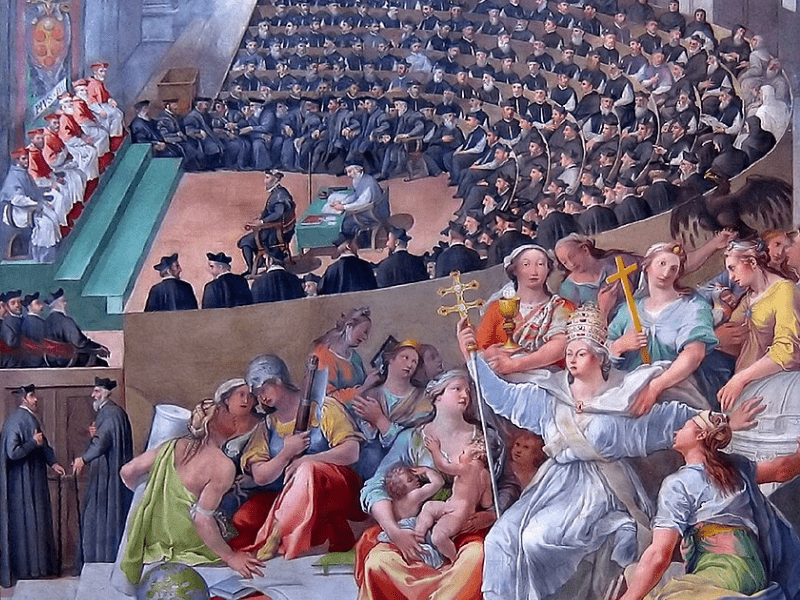
After this first victory, and the death of Pope Pius XII, Bugnini saw his chance to alter the Ordinary of the Mass. The Ordinary had been codified at the Council of Trent, which meant that Pope Saint Pius V (Feast Day May 5) had strictly imposed one form of the Mass on the whole church.
The form had been in use for well over a millennia, but minor variations had crept in. And these were simple words printed in English Missals as early as 1960: “. . . and her spouse Saint Joseph.” (Saint Andrews Daily Missal 1960)

Once again, who could argue against what many perceived as another honour for Saint Joseph? Once that was accepted, Bugnini had his precedent for further changes to the Ordinary of the Mass, and they were many. They were also the first changes in the Ordinary of the Mass for several centuries and long before the Council of Trent. Some of us remember the red covered loose leaf Mass Books that appeared around 1964 that were screw bound and allowed new pages to be inserted “as the changes come through.”
Thus began a desire amongst the faithful for change, and they certainly got change, and in bucketfuls. Change was the norm during the decade of the 1960s, and by the imposition of the Novus Ordo Missae on the First Sunday of Advent, 1969, the Mass was no longer universal: it was a mish mash of anything goes. I once had an altar missal from Papua New Guinea in Pidgin English. It could have been hilarious if it was not bordering on the blasphemous.
‘Catholic’ is a word meaning meaning ‘Universal’. It denotes one of the four Marks of the Catholic Church. But it is a word fast losing its meaning when applied as a ‘Mark’ of the Catholic Church, except for that part that still uses Latin as its language and the Form as it has been for more than a millenia.
Some priests, including Padre Pio, rejected the changes and so began a decade of resistance with seemingly, no hope. Then there arose two lone voices, one French Archbishop and one Brazilian Bishop who gave some hope to the lonely heroic priests who resisted.
In other parts of this Website, you can read of the French Archbishop, Marcel Lefebvre, who visited Australia three times, the first in 1973. He inspired the Heroic priests in this country who fought to preserve the Mass of All Times. In 1988 this Archbishop with his Brazilian confrere, consecrated four Bishops to carry on his work.
Now, 38 years later, two of those Bishops will repeat history and consecrate more Bishops. And so, the Mass of All Times will be preserved for another period of time.
Silvester Donald McLean and his late wife Andrina founded ‘Catholic’: a traditional newspaper printed in country Victoria, Australia from 1982 to 2000.



Leave a Reply