
There is some confusion these days over whether or not Russia has ever been consecrated to the Immaculate Heart in accordance with the requests of Our Lady.
The first reference to a consecration was made in 1917, during Our Lady’s third apparition to the children at Fatima. During the apparition, the Blessed Virgin told the children She would later return to ask for Russia to be consecrated to Her Immaculate Heart, promising that this would lead to the conversion of Russia and world peace.
In June, 1929, Our Lady announced to Sr. Lucia at Tuy, Spain, that the time had arrived for the consecration to take place. Our Lord then visited Sr. Lucia two years later to repeat the request and again in 1936.
It wasn’t until 1942 that Pius XII became the first pope to attempt a consecration. Subsequent Popes have attempted consecrations right up to Pope Francis in 2022, with John Paul II making three attempts, but none of them fulfilled the simple request in all its details.
Where are the fruits?
As the late Fr Gruner points out, Catholics who say that the Consecration of Russia has been performed correctly are “deceiving themselves1, as it is clear that there has been no lasting fruit on the scale promised by Our Lady. World peace, the conversion of Russia and the mysterious “Triumph” of Her Immaculate Heart have evidently not been achieved.
To find a model of what we should expect to see after a validly-performed Consecration, we should look no further than the tiny nation of Portugal. This small European country provides the evidence that a solemn consecration to the Immaculate Heart can place a nation under Our Lady’s protection.
Portugal’s History
Portugal has been solemnly Consecrated on several occasions and the fruits have been both immediate and long-lasting.

Before looking at the Consecrations themselves, it is first necessary to briefly study what was happening in Portugal at the beginning of the twentieth century.
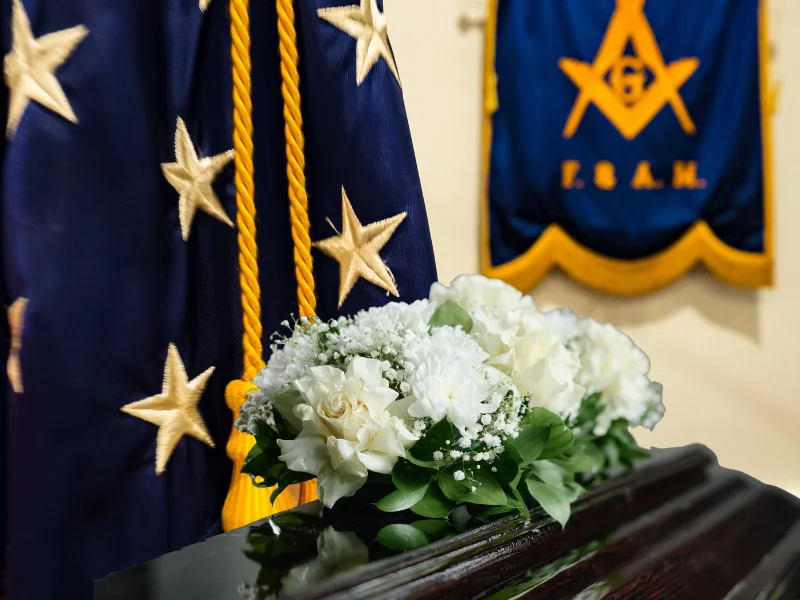
Freemasons had been working against the monarchy in this Catholic nation for one hundred and fifty years, and when King Carlos was assassinated in 1908, it was widely thought that Portugal’s Grand Master was responsible.
Only a few years later, a republic was proclaimed with barely any resistance from the citizenry. Among the crimes of the new government were the suppression of the Jesuits, confiscation of Church property, harassment and imprisonment of priests, and the legalisation of divorce. Portuguese currency was even imprinted with Masonic symbols.
The Bolsheviks then tried unsuccessfully to wrest power from the Masons, and the country continued in a constant state of upheaval with a succession of riots, strikes and assassinations. This fulfilled a prophecy made by little Jacinta Marto before her death that a communist or anarchist civil war would break out in Portugal unless reparations were made by generous souls.
Defeat of the Masons
In 1926, through God’s Providence, the Portuguese government appointed a new finance Minister by the name of Antonio Salazar. A bachelor, Salazar was a devout Catholic who had spent eight years in a seminary. One of Salazar’s associates was Fr Manuel Cerejeira, who later became a bishop then a cardinal.
On May 13, 1931, Cardinal Cerejeira was among the group of bishops who consecrated their nation to the Immaculate Heart of Mary. Their heartfelt plea to Our Lady marked a turning point in Portugal’s time of stormy revolution.
Salazar went on to become the leader of Portugal, and as an avid anti-Communist, sought a return to Portugal’s former God-fearing way of life. The nation eventually became thoroughly Catholic once again in her culture and in her laws, undergoing what some describe as a “Catholic Renaissance.”2

In 1935, Salazar banned Freemasonry, and survived an assassination attempt shortly thereafter. According to mainstream secular historians, Salazar is known as a “dictator”, albeit a “benevolent” one, but to Portuguese Catholics, Salazar was their hero who destroyed the power of Freemasonry and protected marriage and the family.

The Spanish Civil War
The graces continued, and Portugal was miraculously protected during the Spanish Civil War which raged at her borders from 1936-1939. In gratitude for this protection, the bishops of Portugal honoured a promise they had made to Our Lady to renew the consecration of their nation.
On May 13, 1938, during the Consecration ceremony, Bishop Cerejeira proclaimed:
“Since Our Lady of Fatima appeared in 1917 …A special blessing of God has descended upon the land of Portugal …especially if we review the two years which have gone since our vow, one cannot fail to recognize that the invisible hand of God has protected Portugal, sparing it the scourge of war and the leprosy of atheistic communism.” 3
World War II
Prior to the outbreak of the Second World War, Sr Lucia predicted that Europe would be involved in another war and that Portugal would again be protected due to the consecrations. She even wrote to the Pope to tell him that other countries would be assured of this protection should they be consecrated to the Immaculate Heart. 4
As it happened, Portugal was able to remain neutral during the war and so was protected from the heavy losses sustained by so many other European nations. In fact, there were so few Portuguese fatalities that it is difficult to find the actual number.
Portugal was also able to assist many refugees, including thousands of orphans. It is said that Hitler had prepared plans to invade Portugal but they were never enacted. Surely this was Our Lady’s intervention at work yet again? 5
Portugal’s ability to remain relatively unscathed by the War is even acknowledged in secular sources. Wikipedia relates that “Portugal survived the horrors of war not only physically intact but significantly wealthier.” 6
Portugal went on to become a founding member of NATO in 1949, and in 1959, Salazar built the Cristo Rei monument near Lisbon in honour of the Sacred Heart and in thanksgiving for protection during the war.

What can be done?
There remains a certain frustration for lay-persons, since we are unable to personally fulfil the requirements of the Consecration of Russia to the Immaculate Heart of Mary. That is a task which can only be completed by the Pope in union with all the Bishops of the world.
However, we can all play our part, as Sr Lucia explained:
“This is the penance which the good Lord now asks: The sacrifice that every person has to impose upon himself is to lead a life of justice in the observance of His law. He requires that this way be made known to souls.
For many, thinking that the word ‘penance’ means great austerities, not feeling in themselves the strength or generosity for these, lose heart and rest in a life of lukewarmness and sin … The sacrifice required for every person is the fulfilment of his duties in life and the observance of My law. This is the penance that I now seek and require.” 7
By earnestly imploring graces from heaven and by peacefully offering our trials in union with the sufferings of the Lord Jesus, the laity will one day be able to secure the graces for the Consecration to take place. Indeed, the hour is urgent.
As Our Lady told Sr Lucia in 1952,
“Make it known to the Holy Father that I am always awaiting the Consecration of Russia to My Immaculate Heart. Without that Consecration, Russia will not be able to convert, nor will the world have peace.” 8
The two prayers taught by Our Lord:
“Sweet Heart of Mary, be the salvation of Russia, Spain, Portugal, Europe and the whole world.”
“By Thy pure and Immaculate Conception, O Mary, obtain for me the conversion of Russia, Spain, Portugal, Europe and the whole world.”
by Kathy Clubb. A version of this article first appeared in Fidelity magazine.
Kathy Clubb is an Australian writer who home-educated her children for 30 years. She has written on Catholic and pro-life issues at The Remnant Newspaper, Family Life International, LifeSiteNews, Fidelity magazine, Endeavour Forum and more.
Kathy is the founder and editor of Pax Orbis.
- Gruner, Rev. N, “Crucial Truths to Save your Soul” p 21 ↩︎
- https://fatima.org/the-consecrations-of-portugal-1931-1938-and-their-benefits/ ↩︎
- ibid ↩︎
- ibid ↩︎
- https://m.ww2db.com/country/portugal ↩︎
- https://en.wikipedia.org/wiki/Portugal_during_World_War_II ↩︎
- John de Marchi, I.M.C. The True Story of Fatima, p 85 ↩︎
- True Story of Fatima p 85 ↩︎


Leave a Reply