
Last week’s death of a young Spanish woman by euthanasia shocked the world. Although her father fought for eighteen months to have to procedure stopped, he was overruled by the Spanish courts.
At the eleventh hour, Noelia’s best friend – someone who may have been able to talk Noelia out of going ahead with her death – was denied access. When there was question of yet another legal intervention, authorities stated that was not possible: Noelia’s organs had been targeted for harvesting, earning millions for their sale.
This case speaks to a cascade of tragedies which ended in a young woman being failed at every turn, and paying the ultimate price to a society which unashamedly exploits the vulnerable.
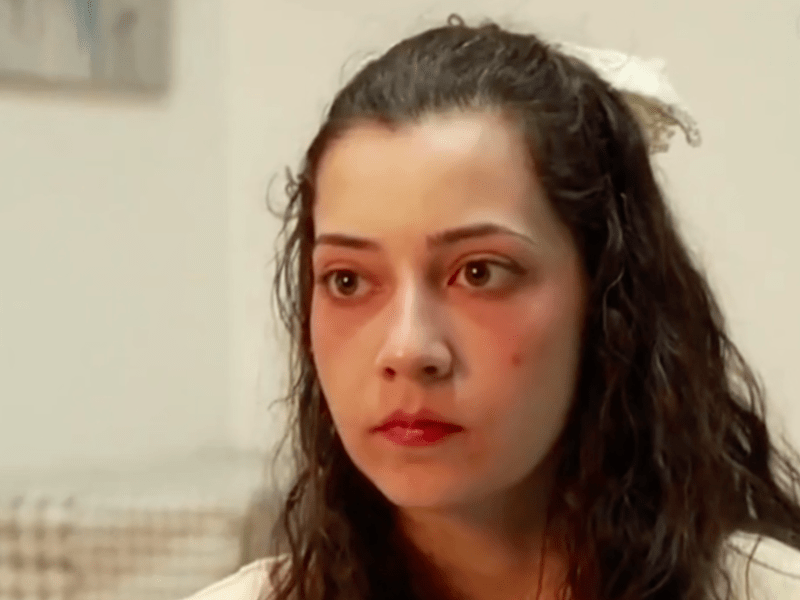
Noelia Castillo Ramos was a 25-year-old woman from Barcelona, Spain, who will end her life through euthanasia on 26 March, after a long legal battle. Her controversial case has attracted widespread media attention in Spain.

The last few years of Noelia’s life had been marked by intense pain. She was diagnosed with BPD (Borderline Personality Disorder) at a young age, a serious condition that causes emotional instability, a profound sense of emptiness and fantasies of self-harm.
She had been under state guardianship since the age of 13. Due to their limited financial situation, her parents have had to rely on public resources for her care.
In 2022, she was raped, the details of which remain largely unknown. This traumatic event was the breaking point in her life. Afterwards, she attempted suicide by jumping from a fifth-floor window. She survived, but was left paraplegic.
Since then, she had had to use a wheelchair and took different medications to relieve the pain. Although these medications were effective, they caused her severe side effects.
After conducting several mental capacity tests and treatments, the psychiatrists who treated Noelia concluded that, despite her BPD, she was capable of making decisions about her life and death.
However, her story portrays profound pain, traumatic events and a BPD diagnosis, which at least partially clouds the autonomy attributed to her by the doctors, since BPD can severely affect a person’s emotions and undoubtedly impact decision-making.
In 2023, a discharge report concluded that Noelia was medically stable and her physical pain was under control. Nevertheless, despite all her father’s efforts to change her mind, on 10 April 2024 she officially requested euthanasia from the Catalan Commission for the Guarantee and Evaluation of Rights.
Just a couple of months later, on 18 July 2024, the commission accepted the request.
Noelia gave a final television interview before her death, in which she reaffirmed her decision to end her life with the support of her mother, although the latter made it clear that she did not want this ending for her daughter either.
The family is actually divided on the issue. Her father sought help from the Christian lawyers association, arguing that Noelia was not psychologically capable of making that decision. Against his wishes, the process continued.
This case sets a dangerous precedent in Spanish society, suggesting that a life of extreme suffering is no longer “worthy” of being lived.
Ours is a failed state that allows its citizens to resort to death not only for physical pain, but also for mental illness, as in Noelia’s case.
The 2021 Organic Law regulating euthanasia in Spain was originally approved for people suffering from a chronic, incurable illness that causes significant pain. This was based on the new individual right, namely the autonomy to exercise freedom over one’s own life and death.
Between June 2021 and mid 2025, euthanasia has been applied to 1,034 people in Spain.
But, as anticipated, there is currently no clear definition of what constitutes this type of painful illness. This case raises the question: Do depression, various personality disorders and borderline personality disorder fall under this category? The answer seems to be yes.
We look with concern to a future that already seems dystopian, because depression is currently spreading throughout the world like a pandemic, and Spain is one of the countries with the highest suicide rates among young people.
Can the solution to this mental health crisis be entrusted to the state? Does society have the necessary tools to respond to profound suffering? Noelia’s case suggests it does not.
The state is making a serious mistake by believing that the dignity of life can be defined in terms of suffering.
It would be wise to view with suspicion this law based on the right to personal autonomy, which ignores that life is not the absolute private property of the individual, but rather has an origin and purpose that transcend the person.
God breathed the breath of life into Noelia, created her and was pleased to see her born, so that she might know Him and find the meaning of her life in Him.
Noelia’s pain was real and her desire to end her suffering was legitimate and entirely understandable. However, even though she was broken inside and had lost the will to live, Noelia was made in the image of God. Her life had incalculable value.
This is a heartbreaking story that should move us deeply. We live in a time of a total loss of the value of human life, where people have become disposable consumer goods. Society was unable to restore hope to Noelia, and then offered her the quick way out, disguised as ‘dignified’: death.
That is quite the opposite of the message of the Gospel, which delves into the heart of suffering to redeem it — not necessarily to eliminate it. God can redeem a life, even in such extreme circumstances.
Job longed for death; Elijah cried out to God to take his life; but undoubtedly, the most extreme case of physical and emotional pain was suffered by our Lord Jesus Christ.
Jesus is an expert in impossible causes; he is the Lord of those who seek him, of the brokenhearted; he is the comforter and the giver of hope.
The state surrendered too quickly with Noelia; God would never have done so, and neither should we surrender to the suffering of others by offering death as a solution.
This article is republished under a Creative Commons BY-NC-SA 3.0 license.


Leave a Reply